
In short
A steel lintel that sags, a cracked lintel or a crumbling sill needs to be replaced. In Montreal, the average price is $1,500 to $3,500 per opening, depending on the type of lintel (galvanized steel, concrete, arch or stone), the floor and access to the facade. Galvanized steel is the least expensive and stone the most expensive. Carved lintels call for a precise assessment. Before replacing a concrete, stone or arched lintel, check with your borough: it may require a return to the building's original features.
On Montreal's brick plexes, from the Plateau-Mont-Royal to Rosemont by way of Outremont, every window and every door on the facade has two parts that work hard: a lintel at the top and a sill at the bottom. Cam Construction has been replacing lintels and sills in Montreal since 1991. See our residential and commercial masonry service
Lintels and sills: what they do
The lintel, at the top of the opening
The lintel supports the masonry above a window or a door. Without it, the brick would have nothing to rest on above the gap. On a Montreal building, you'll mostly find four kinds of lintels:
- The galvanized steel lintel, shaped like an L.
- The concrete lintel, sometimes moulded with a pattern.
- The stone lintel.
- The arched lintel, an arch that carries the masonry above it.
The sill, at the bottom of the opening
The sill is the piece placed under the window. It directs water outward, so it drips off outside the wall. That way, it helps keep water from getting in at the base of the opening. A damaged sill lets water reach the wall under the window.
Membranes to manage water properly
When a lintel is installed, and when a sill is installed as well, protective membranes are also put in. They ensure good water management.
Why a steel lintel rusts and sags
Non-galvanized steel lintels eventually rust: that's normal. They don't even need to get much water. With time and humidity, rust sets in.
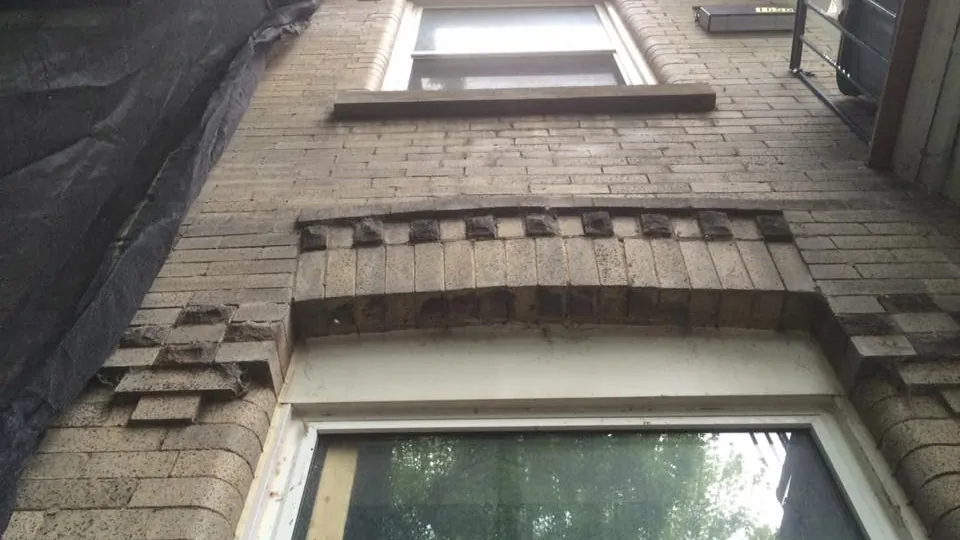
The problem is that rust takes away the steel's load-bearing capacity. The lintel gets weaker. When it becomes too weak, it sags under the weight of the brick. The masonry above the window follows the movement and cracks.
How much does it cost?
Ballpark figures for a window or a door on a Montreal plex. Every facade is different: only an on-site estimate gives the exact price. You can also see one of our lintel replacement projects in Rosemont.
| Work | Average price |
|---|---|
| Replace a lintel or a sill, per opening | $1,500 to $3,500 |
Range given by Cael Camirand, General Director of Cam Construction. The type of lintel, the floor and access to the facade make the difference between the low and the high end of the range.
What makes the price vary
The floor
The price always depends on where the opening is. A lintel on the third floor doesn't cost the same as one on the ground floor: the higher it is, the longer the work takes.
How the work is done
This is what makes the bill vary the most. Can the work be done from a lift, or does scaffolding have to go up? When the scaffolding takes up part of the sidewalk, the City of Montreal also requires a permit to temporarily occupy public property.
The lintel material
From least to most expensive:
- Galvanized steel: the least expensive lintel.
- Concrete: a little more expensive.
- Arch (arched lintel): between concrete and stone.
- Stone: the most expensive of the four.
Some concrete, stone or arched lintels have shapes or carvings. Those call for a precise assessment: the price depends on the detail to reproduce.
Stone, concrete or galvanized steel: which sill to choose?
There's no good or bad lintel, and no good or bad sill. Stone, concrete or galvanized steel: each one does the job. The real question is elsewhere. The new lintel and the new sill must respect the building's original look and features, and its architecture. On a period facade, that's what should guide your choice of material.
Signs they need to be replaced
When you see one of these signs, it's time to replace the lintel or the sill.
Crack in the lintel
A horizontal or vertical crack in a concrete or stone lintel.
Sagging lintel
A lintel that bows downward. On a steel lintel, this is often a sign it has rusted.
Cracked brick above the window
Cracks in the masonry above the opening often go with a sagging steel lintel.
Crumbling sill
Missing pieces, crumbling or cracks on the top of the sill.
The rules in Montreal
To replace a lintel, especially a concrete, stone or arched one, check with the City first and get a permit if needed before you start. Boroughs can require a return to the building's original features. If the work doesn't comply, you could end up paying to have it done, then paying again to have it redone. We check your borough's requirements and file the permit application for you. Learn more about our permit application service
Make the most of the scaffolding
Replacing lintels and sills on a facade often means putting up scaffolding. It's a major expense in the project. While it's up, take the opportunity to have other work done on the same facade:
- have the window caulking checked;
- repair the facade masonry where it needs it;
- repair the rotten parts of the balconies;
- repaint the cornice, or replace some of its parts if needed.
Since the team is already set up, you save a lot of money compared with having the work done separately.
A project: steel lintels redone in concrete on the Plateau
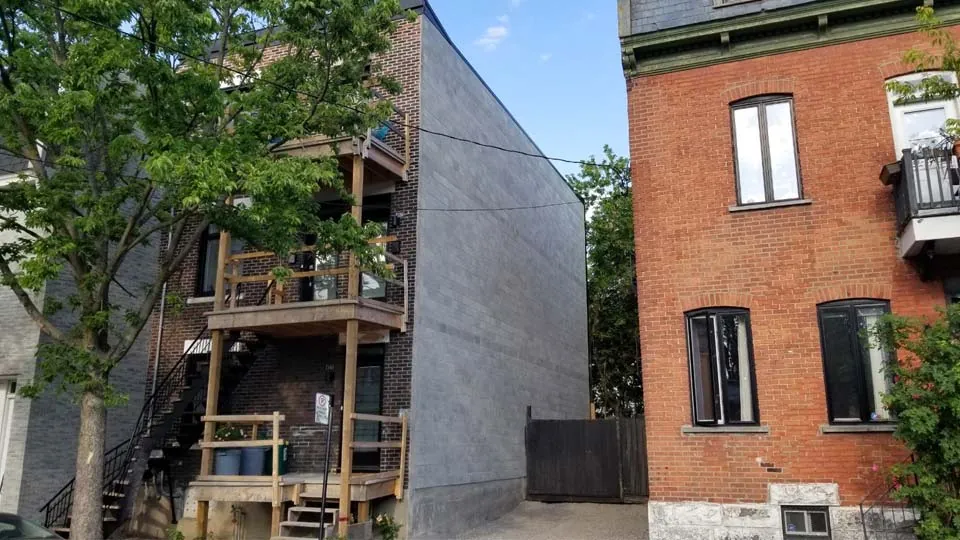
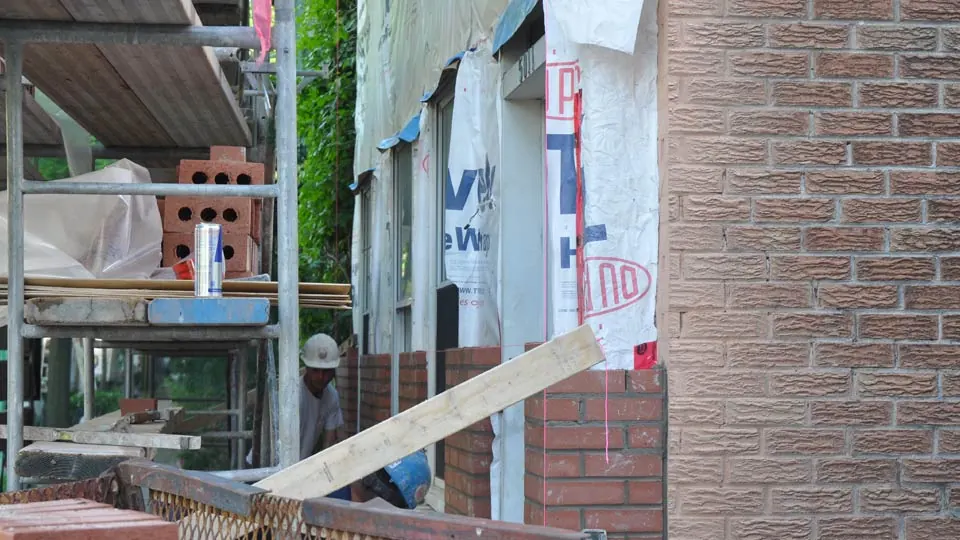
An owner in the Plateau-Mont-Royal contacted us after having his facade redone by another company. That company had rebuilt everything: a nice wall of new brick, with steel lintels. Then the City stepped in. The owner had to have scaffolding put back up, the steel lintels removed and concrete lintels with a moulded pattern installed instead. "It's a shame: the client had to pay for a second job to bring his facade into line with the City's requirements," says Cael Camirand.
Before you sign
- The RBQ licence. Check the contractor's licence with the Régie du bâtiment du Québec. Cam Construction's: 2854-6760-18.
- Certification. Cam Construction is an APCHQ-certified contractor.
- The permit. Ask who checks the borough's requirements and who files the application. At Cam Construction, we take care of it.
- The planned lintel. Ask what material and what shape the contractor is proposing, and whether they respect your facade's original features. That's what saves you from having to redo everything.